

The Infrastructure AI Actually Needs
Artificial intelligence is reshaping industries, from national security to energy to healthcare. Yet for all the excitement, most organizations fail to achieve impact. The RAND Corporation reports that over 80% of AI projects fail — twice the failure rate of traditional IT projects.
The reason? AI has outpaced the data systems designed to feed it. Models may be state-of-the-art, but the data orchestration layer — the plumbing that moves, harmonizes, and contextualizes data — is fragile, fragmented, and outdated.
SeerAI was founded to solve this problem. Our mission is to create the neutral infrastructure that enables data, models, and people to work together seamlessly. We call this the Bell Labs for Data: a digital environment where datasets, concepts, and expertise naturally connect to accelerate discovery and innovation.
The Problem: Why AI Stalls
Rob Fletcher, SeerAI’s Chief Scientist & Co-Founder, frames the challenge with a simple analogy:
“Imagine a commercial kitchen. Every day it needs ingredients from different suppliers — vegetables from one, meat from another, dairy from yet another. But what if the deliveries arrive at different times? What if some suppliers bring the wrong items, or the ingredients aren’t prepared properly for cooking? What if the plates are too small, the stove the wrong size, and the patrons can’t even read the menu? That’s the current state of data orchestration.”
oday, organizations face deeply fragmented data landscapes. Information is scattered across proprietary databases, cloud storage systems, and even spreadsheets on hard drives… each operating in isolation. Bringing these datasets together into a unified view often requires manual integration, custom code, and one-off workarounds that are fragile and non-scalable. The result is wasted time, wasted money, and lost opportunities for insight.
This fragmentation extends beyond technology to people. Teams managing different data silos often lack a common model or language, making collaboration slow and error-prone. Analysts struggle to reconcile mismatched formats, while decision-makers receive delayed or incomplete information. The result is that even when AI models are powerful, the underlying data orchestration prevents them from reaching scaled production or delivering impact.
The SeerAI Solution: Orchestration, Not Duplication. Don’t Move Data — Connect to It
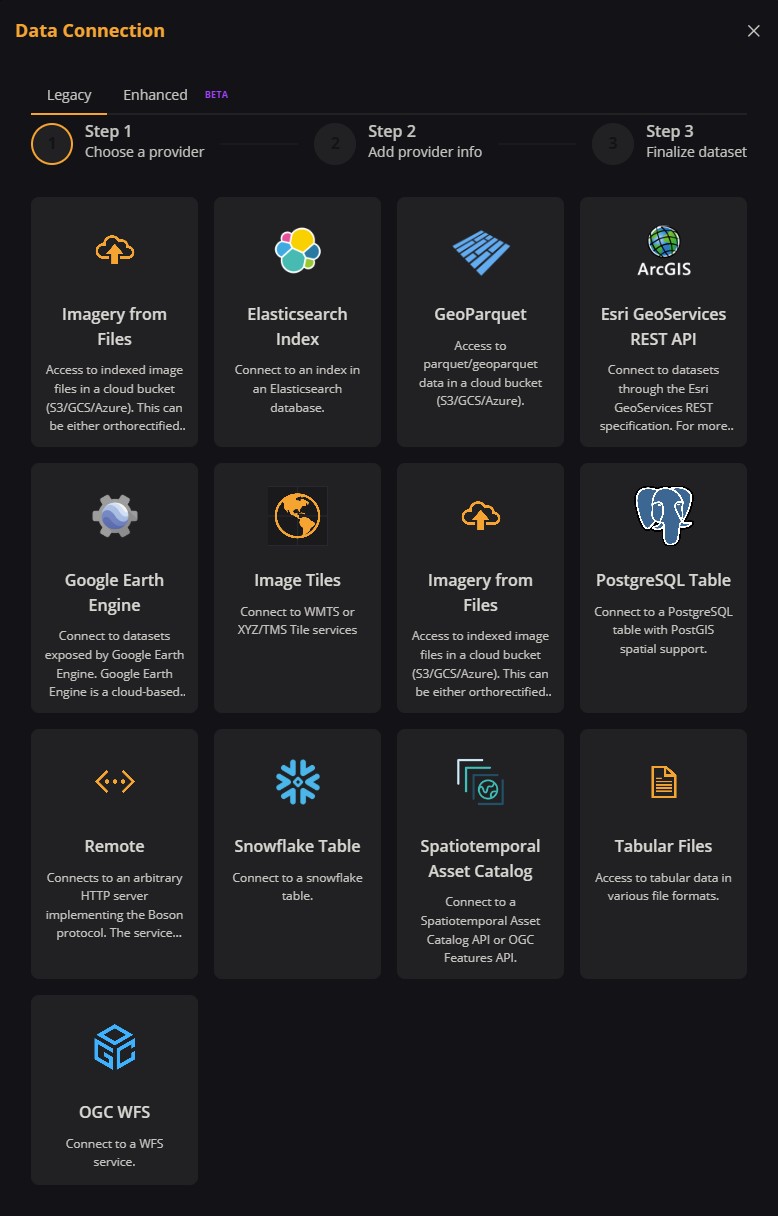
SeerAI’s core principle is deceptively simple: we do not move or duplicate data. Instead, we connect directly to existing sources, allowing them to remain where they are while still becoming part of an orchestrated system. By eliminating costly extract-transform-load (ETL) steps, organizations can accelerate workflows, reduce infrastructure overhead, and immediately unlock new insights. This approach has already been proven at a technology readiness level, with large-scale deployments demonstrating its impact.
All Data Looks the Same Inside the Platform
Once data is connected to SeerAI, it is harmonized into a single, universal representation. Geospatial imagery and tabular spreadsheets are treated with equal priority, appearing in the same environment ready for analysis. This means analysts no longer waste time reconciling mismatched formats or writing one-off scripts. Instead, they can simply work with the data.
Scale Anywhere
SeerAI is designed for resilience at every scale and location. Whether running AI models at the tactical edge in disconnected environments or processing petabytes of global data in the cloud, the platform ensures continuity of operations. This scalability was demonstrated after Hurricanes Milton and Ian, when SeerAI processed two terabytes of NOAA imagery and joined the results with millions of building footprints. The system delivered actionable insights to the public and FEMA within one hour of data availability. By reducing FEMA’s assessment cycle from weeks to hours, SeerAI not only saved enormous amounts of human effort but also accelerated life-saving disaster response
Knowledge Graph Contextualization
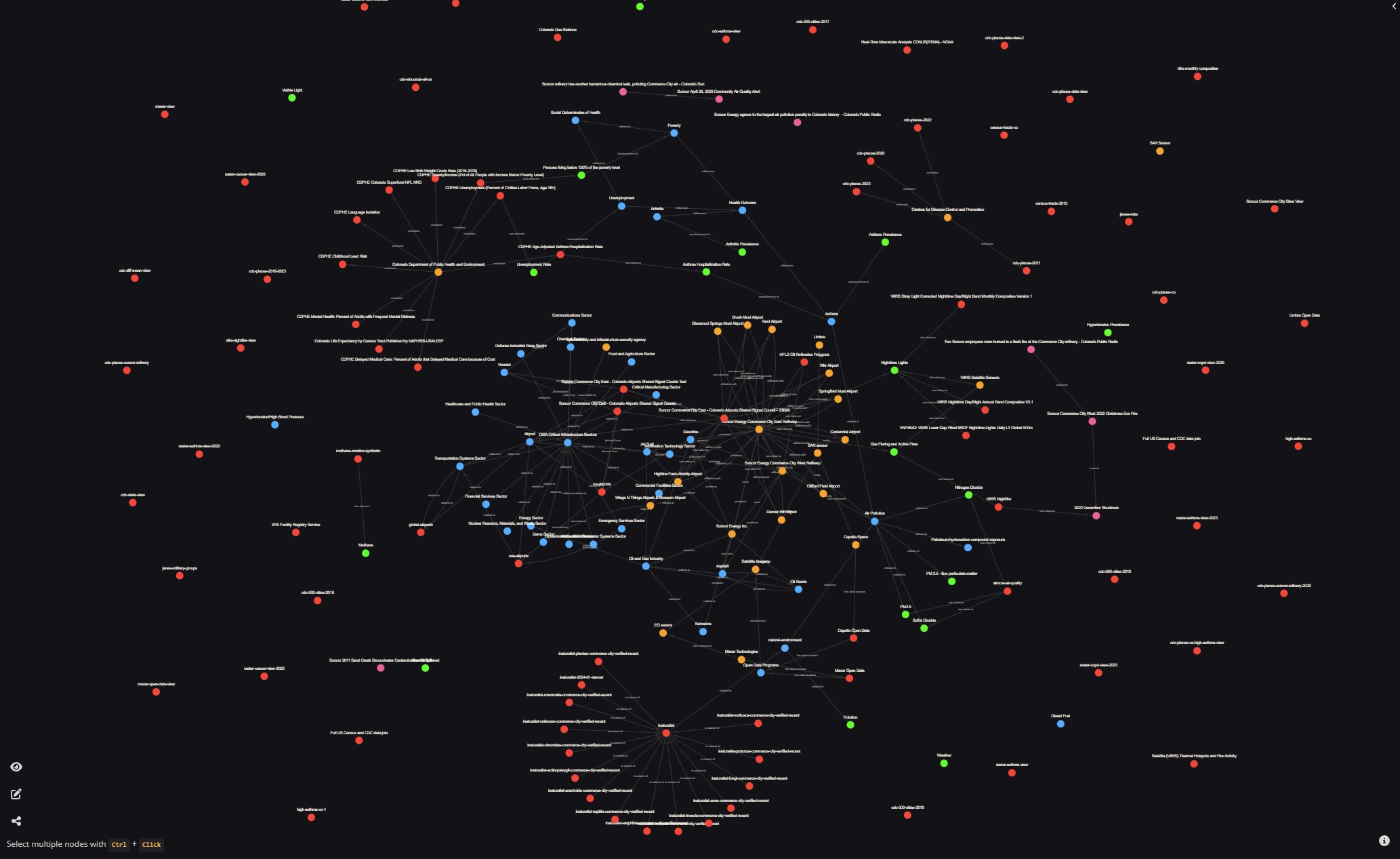
Unlike traditional data platforms, SeerAI does not store raw data. Instead, it captures and preserves the connections between datasets, models, and workflows in a spatiotemporal knowledge graph. This allows relationships, provenance, and usage context to be reused across projects and missions. The knowledge graph creates a living digital space, a Bell Labs for data, where innovation compounds over time. By emphasizing context instead of raw storage, SeerAI ensures that data remains meaningful and reusable across domains, organizations, and future agentic challenges.
Why SeerAI Is Unique
SeerAI’s philosophy is rooted in a proven model of innovation: the collaborative environment of Bell Labs. Just as Bell Labs produced world-changing discoveries by bringing people and ideas together, SeerAI creates a digital space where datasets, models, people and knowledge naturally connect. The software is not just another data tool; it is an innovation hub for the data-driven age.
Another key differentiator is SeerAI’s role as neutral infrastructure. We do not compete with customers’ applications or end-use cases. Instead, we enable them. This neutrality ensures that SeerAI can operate across industries and missions without forcing lock-in or bias. In this way, SeerAI is to data orchestration what Plaid became to fintech or LiveRamp became to marketing: the invisible but essential middleware that makes entire ecosystems function.
Finally, SeerAI’s emphasis on context sets it apart. While competitors focus on hoarding raw data in centralized warehouses, SeerAI recognizes that where and when are the fundamental dimensions of meaning. By treating space and time as equal citizens in analysis, SeerAI unlocks insights that others overlook. The result is a platform that is not only technically advanced but philosophically aligned with the realities of the spatiotemporal world.
Use Cases
In the defense and intelligence sector, SeerAI enables analysts to fuse OSINT, GEOINT, SIGINT, and HUMINT into a single operational picture. By eliminating schema friction and siloed data flows, decision-makers can achieve real-time cross-domain awareness.
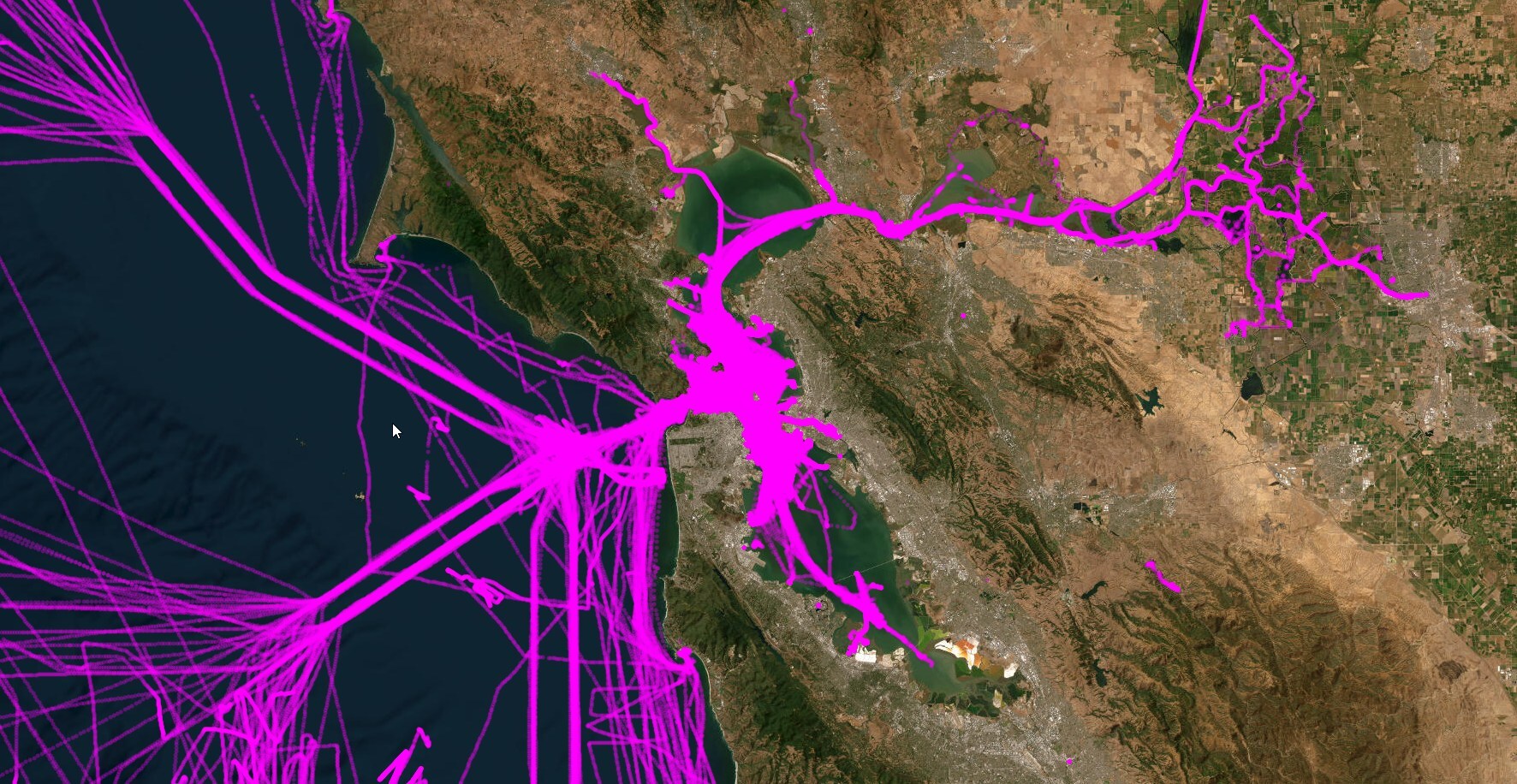
In energy and infrastructure, SeerAI connects seismic, geospatial, and IoT sensor feeds to monitor pipelines, grids, and refineries. The ability to orchestrate these diverse sources reduces downtime, prevents accidents, and saves millions in operational costs.
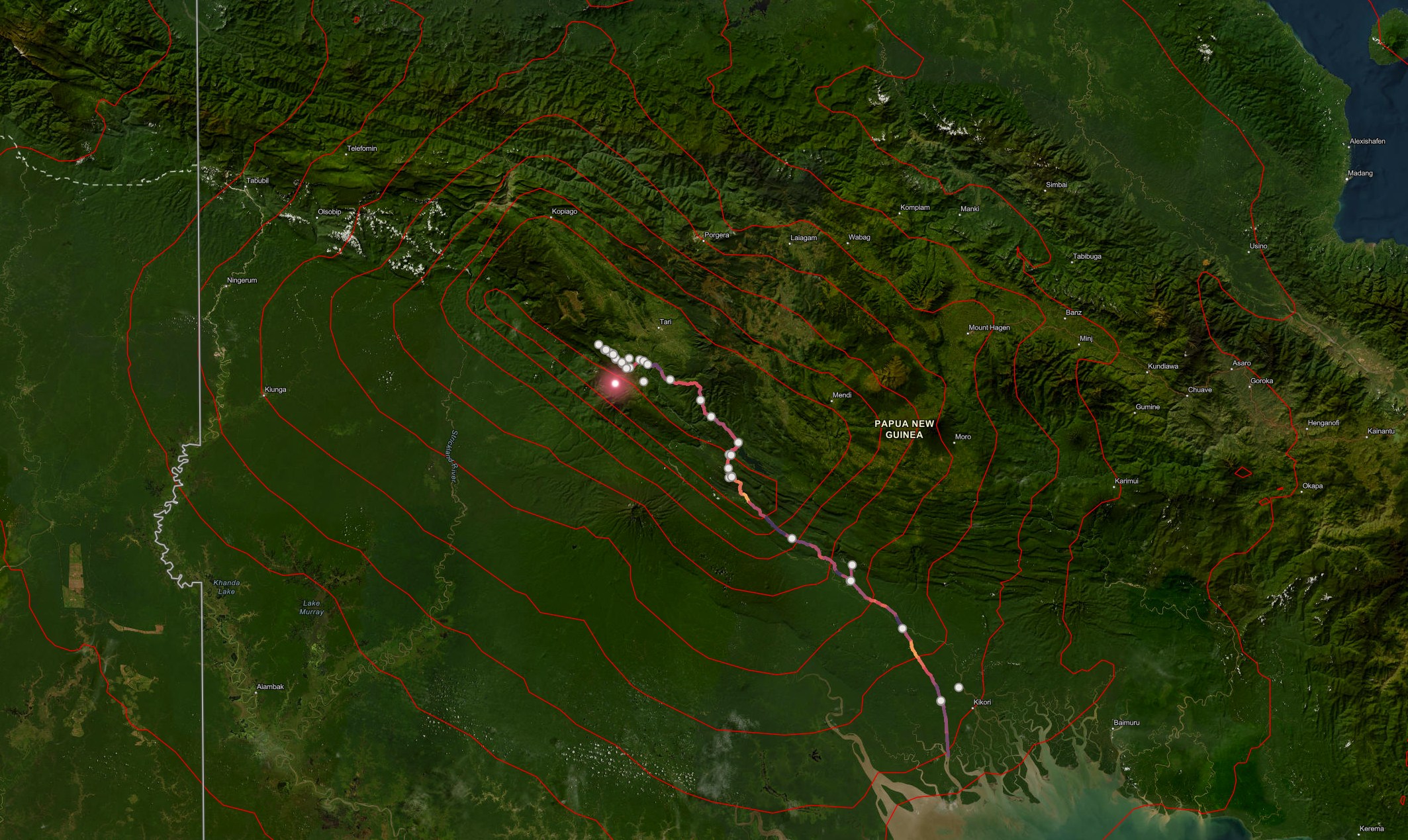
For disaster response and public safety, SeerAI automates damage assessments by rapidly ingesting and analyzing satellite and aerial imagery. This allows governments and aid organizations to respond faster, allocate resources more effectively, and save lives in the critical hours following a disaster.

In the commercial enterprise sector, SeerAI eliminates data silos that slow multinational operations. By harmonizing fragmented IT systems into a single environment, companies can deploy AI more efficiently, accelerate digital transformation, and stay ahead of competitors.
Market Context and Competitive Landscape
The data infrastructure landscape is crowded, but few address orchestration at the spatiotemporal level. Cloud providers such as AWS, Azure, and GCP offer ETL and warehousing tools, but these still require centralizing and duplicating data. Geospatial specialists like Esri and FME excel at spatial workflows but often neglect time as a primary factor. Data warehouse vendors such as Snowflake and Databricks centralize storage but struggle with schema friction and contextualization.
SeerAI is different. By treating all data as spatiotemporal and by focusing on context as infrastructure, the platform delivers resilience, interoperability, and scalability unmatched by incumbents. This positioning allows SeerAI to become the plumbing layer for AI, the invisible backbone upon which the next generation of intelligent systems will run.
Any Data. Any Size. Anywhere.
AI cannot succeed on broken plumbing. SeerAI fixes the foundation. By orchestrating instead of duplicating, harmonizing instead of fragmenting, and contextualizing instead of centralizing, SeerAI unlocks the full potential of AI across government, enterprise, and society. Just as Bell Labs defined the technological revolutions of the 20th century, SeerAI is building the innovation hub for the 21st century